The way your firm collects and organizes client documents often reveals deeper operational strengths and weaknesses.
• 4 min read
• EasyBankStatements

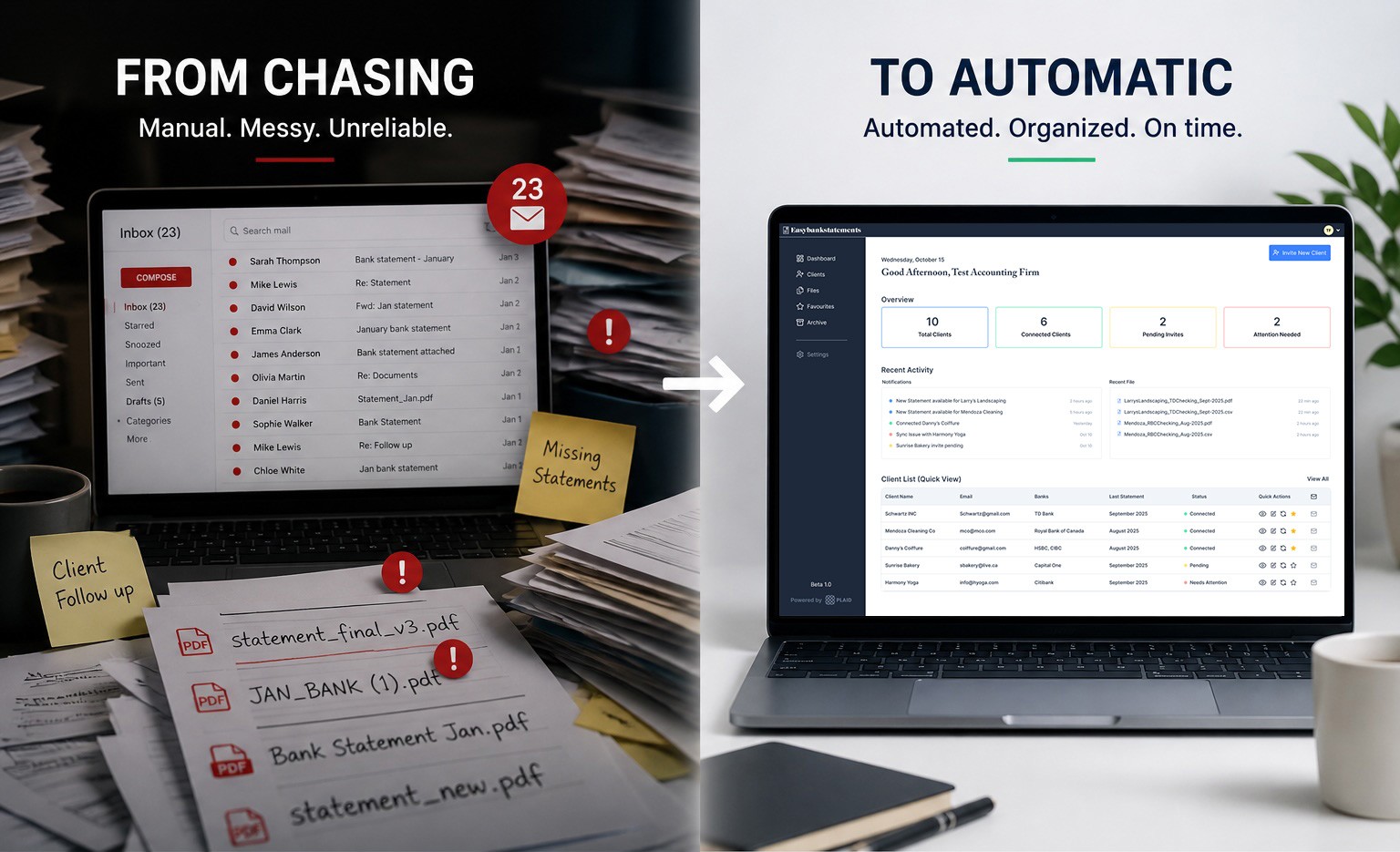
A firm’s document workflow often reveals far more than how files are collected and stored. It reflects how the firm operates. The way statements, PDFs, and client documents move through your business is often a direct reflection of your internal systems, team structure, and operational maturity. For many bookkeeping firms, document workflows evolve organically over time. A client emails a PDF. Someone downloads it. The file gets renamed. It is manually placed into a folder. A follow-up email is sent for missing statements. At first, this may feel manageable. But over time, the workflow itself begins to reveal where the firm is carrying operational friction.
What a fragmented workflow often signals
If your team is collecting documents through scattered email threads, shared drives, client texts, and manual bank logins, it often points to deeper inefficiencies.
These may include:
lack of standardized monthly processes
inconsistent file naming conventions
unclear ownership between team members
duplicated follow-up work
increased risk of missing files
delayed month-end close timelines
The document workflow is often the first place operational inefficiencies become visible. Because it touches every client, every month, small process issues quickly compound. What feels like minor friction at 10 clients can become a serious operational burden at 75 or 100.
The hidden cost of poor document workflows
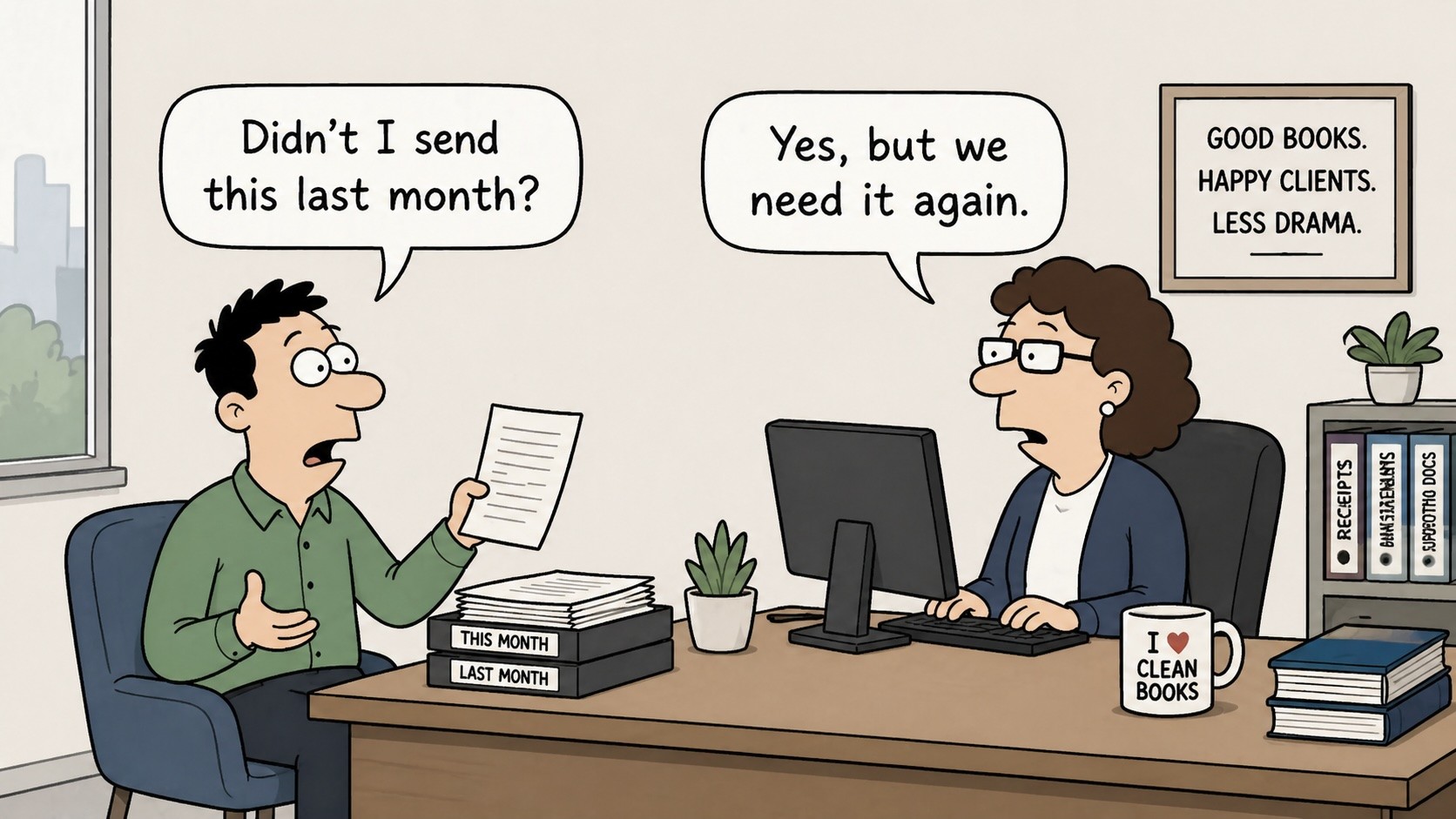
The cost is not only time. It is also reliability. When document collection depends on memory, scattered communications, and manual downloads, the likelihood of missing statements or incomplete files increases. This creates downstream issues during reconciliation and reporting. It can delay close cycles, create internal confusion, and introduce unnecessary back-and-forth with clients. Over time, this impacts both profitability and client experience. A strong workflow reduces uncertainty. The team knows where documents are, when they arrive, and how they are stored. That clarity becomes a competitive advantage.
What strong firms do differently
High-performing firms tend to build document workflows that are predictable and repeatable.
This includes:
centralized document storage
consistent naming conventions
clear monthly collection timelines
reduced reliance on email chains
automated retrieval wherever possible
The goal is not just organization. It is operational consistency. When the document workflow is strong, everything downstream becomes easier.
Where EasyBankStatements fits in
EasyBankStatements helps firms streamline monthly bank statement collection, reduce manual follow-up, and create a more reliable document workflow that scales with client growth.
Book a demo to see how your firm’s document workflow can become a competitive advantage rather than an operational bottleneck.