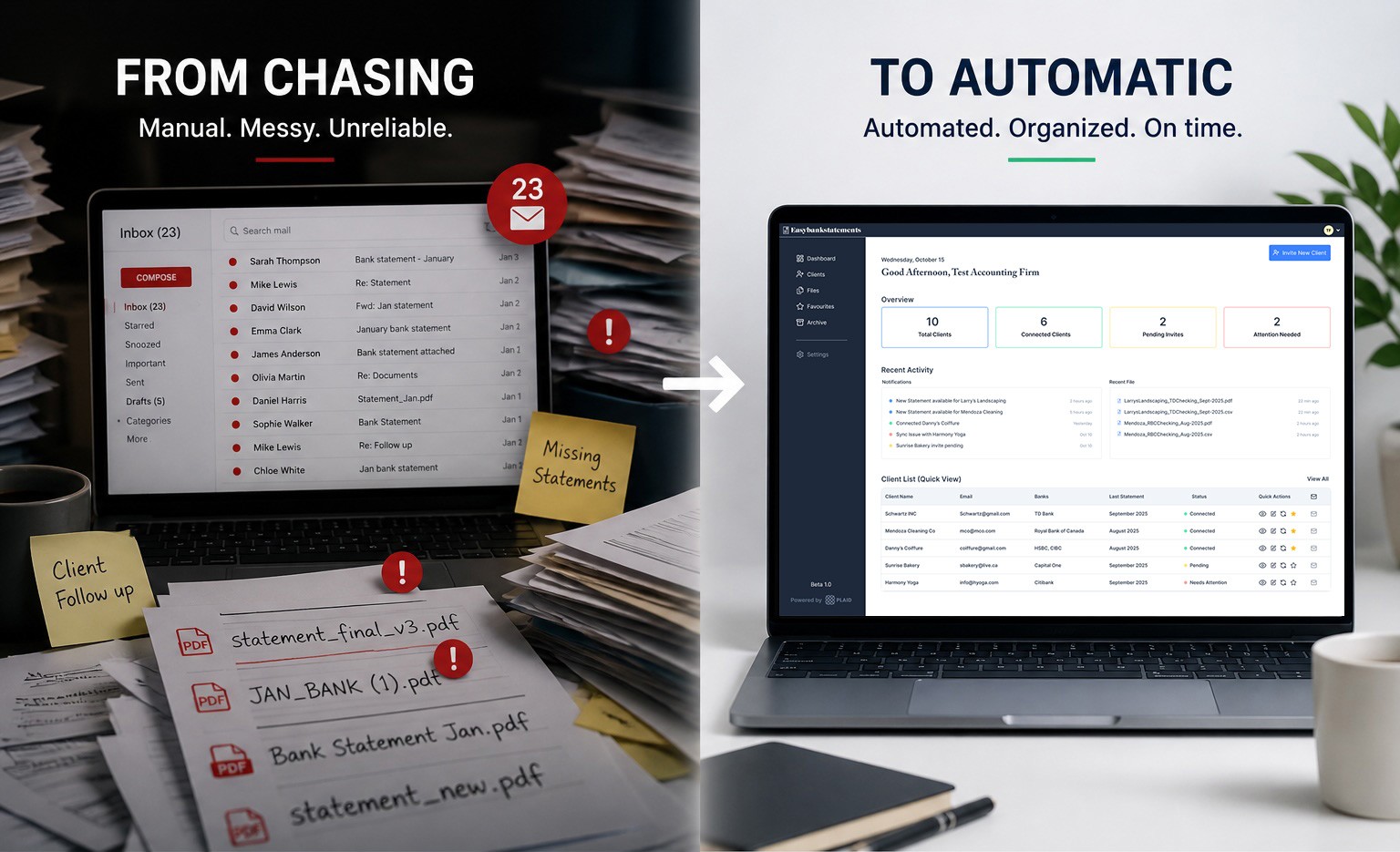
Most accounting workflows rely on collecting bank-issued statements, but that assumption may be outdated for monthly bookkeeping.
• 5 min read
• EasyBankStatements

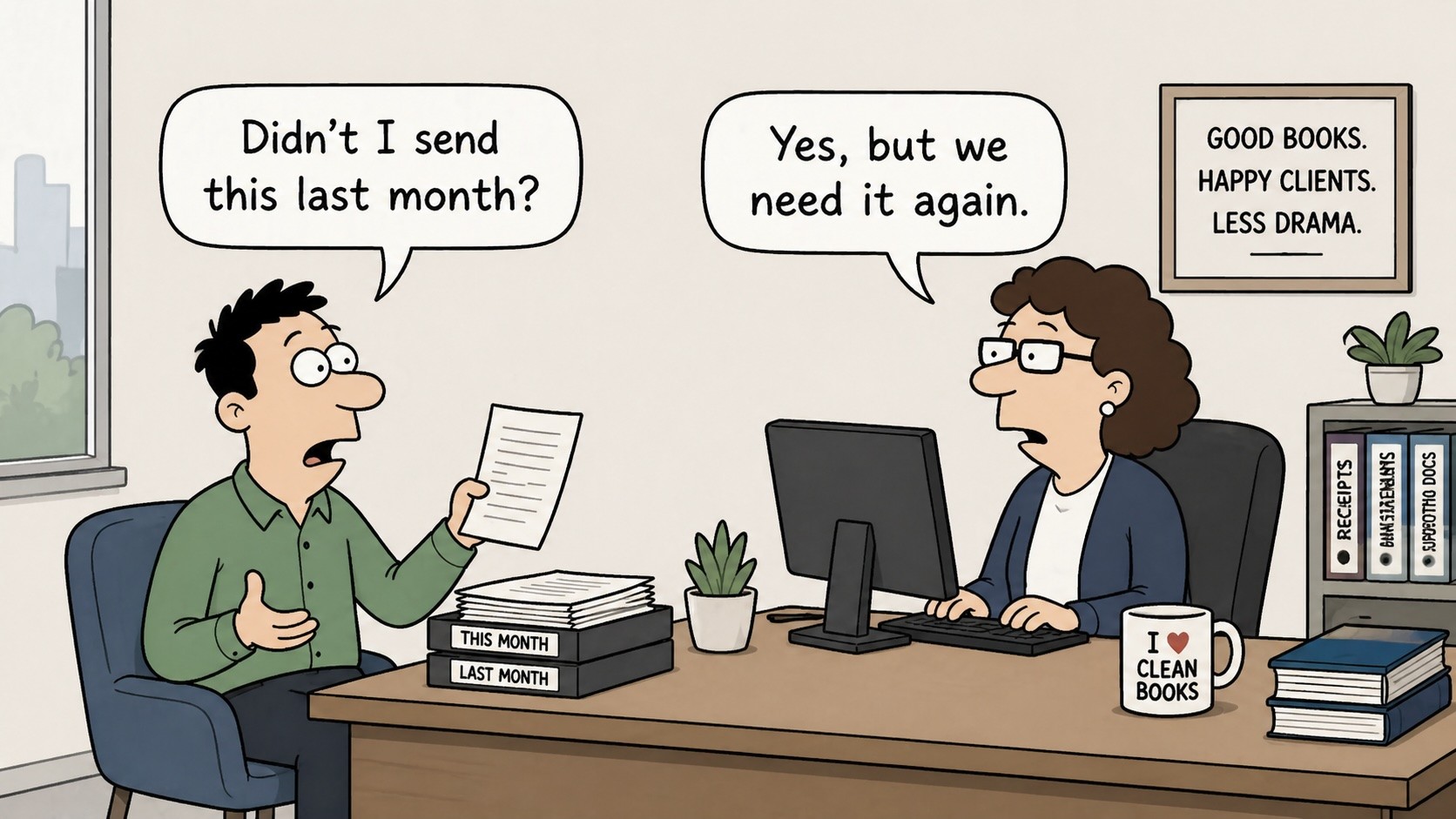
Every month, the same process repeats itself. You follow up with clients for their bank statements. Some send them right away. Others take days or weeks. A few never respond at all. So you follow up again. For most accounting firms, this has simply become part of the workflow. It’s expected. It’s accepted. But it’s worth asking a simple question:
Do you actually need bank-issued statements every month?
The assumption is that you do. That in order to reconcile accounts properly, you need official PDF statements directly from the bank. In reality, that’s only true in certain situations. There are two very different use cases behind the idea of “bank statements.”
Monthly bookkeeping
In this context, what really matters is having complete and accurate transaction data for a defined time period. You need to see what came in, what went out, and when. You need consistency across clients and across months. You need access to that information on time so work can begin without delays. In this case, the format of the statement matters far less than the data itself.
Audit, lending, and compliance
Here, the requirements are different. You may need official, bank-issued documents for verification purposes. The format matters. The source matters. And having the original PDF from the bank is often necessary. These are valid requirements, but they are not the same as day-to-day bookkeeping. The problem is that most workflows treat both use cases the same way. Firms chase bank-issued statements every month, even when the task at hand only requires the underlying data. That’s where friction builds. The real question isn’t “Do I need bank statements every month?” It’s “Do I need bank-issued statements for this specific task?”
A different approach
EasyBankStatements is built around that distinction. Instead of collecting PDFs from clients, it pulls transaction data directly from their banks and generates clean, standardized monthly statements automatically. The result is consistent, organized data that’s ready for reconciliation without the need for follow-ups. Because the data is pulled through secure bank connections, it reflects the same underlying transactions that appear on bank-issued statements. In practice, this means you’re working with the same financial information, just in a more consistent and accessible format. For firms focused on monthly bookkeeping, this removes one of the most time-consuming parts of the process. At the same time, there are still cases where official bank-issued statements are needed. We’re actively working toward supporting these where available, though coverage can vary depending on the institution and account type.
The takeaway
For most firms, the real value isn’t in collecting documents. It’s in having reliable data, on time, every month. And that’s where automation makes the biggest difference. If you’re curious, try it with one client and compare the generated statement to what you receive from the bank. It’s often the fastest way to understand how it fits into your workflow.