What starts as convenience can slowly turn into cost, complexity, and lock-in as firms grow.
• 6 min read
• EasyBankStatements

All-in-one accounting platforms have become the default choice for many bookkeeping firms. They promise simplicity: everything in one place, one system to manage, one workflow to standardize. And early on, that convenience is real. But as firms grow, the trade-offs begin to surface.
The convenience that got you here
There’s a reason most firms start with an all-in-one platform. It simplifies onboarding, standardizes processes, and reduces the need to evaluate multiple tools. For small teams, it works well. Everything feels contained and manageable. But growth changes the equation.
When convenience starts to scale into cost
As your client base expands, so does your reliance on the platform. What was once a simple monthly expense becomes a growing operational cost tied directly to your scale. Pricing tiers, add-ons, and bundled features begin to compound. Many firms find themselves paying for capabilities they don’t fully use, simply because they are part of the package. The result is subtle but meaningful: cost increases without a proportional increase in value.
The weight of doing everything in one system
All-in-one platforms are designed to cover a wide range of needs. But that breadth often comes at the expense of flexibility. Workflows start to adapt to the software, rather than the other way around. Processes become heavier. Small inefficiencies compound across clients. And over time, teams spend more effort navigating the system than optimizing their work.
The lock-in effect
One of the most overlooked aspects of all-in-one platforms is how difficult they become to move away from. Client data, reporting structures, and internal workflows become tightly coupled to the system. The larger your firm becomes, the higher the switching cost. This creates a form of operational dependency that few firms plan for early on.
A different way to think about your stack
Instead of relying on a single platform to do everything, many firms are starting to rethink their approach. A more modular stack allows each part of the workflow to be handled by tools designed specifically for that function. The result is often a lighter, more efficient system that scales more cleanly over time.
Where EasyBankStatements fits in
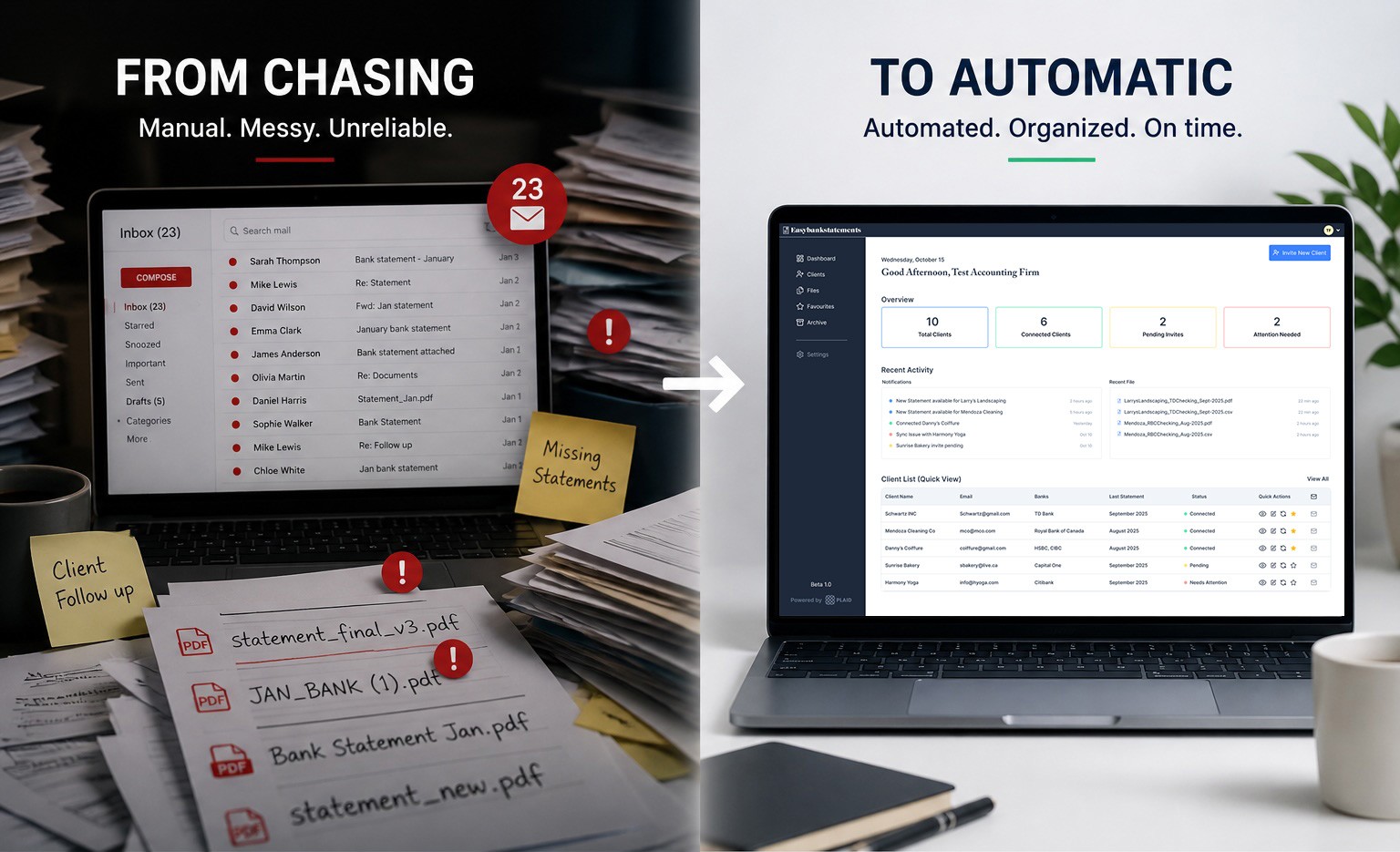
EasyBankStatements focuses on one part of the workflow: collecting and organizing bank statements automatically. Instead of building around a large, generalized system, it integrates as a focused layer that removes manual work and reduces friction. Less complexity. More control.
Book a demo to see how a more modular approach can simplify your workflow and reduce hidden costs as you scale.