Learn how bookkeeping firms can stop wasting hours every month chasing clients for bank statements.
• 5 min read
• EasyBankStatements

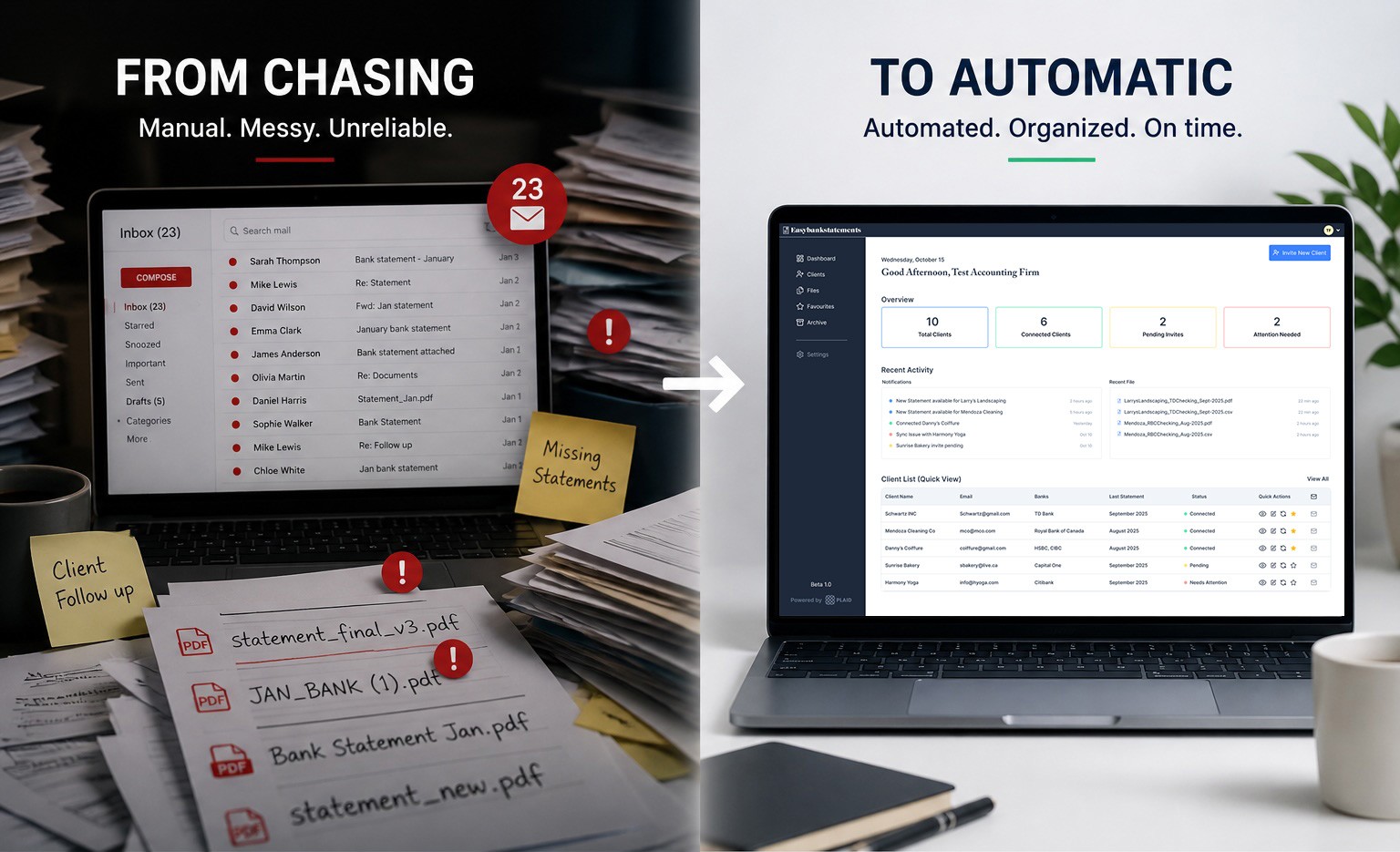
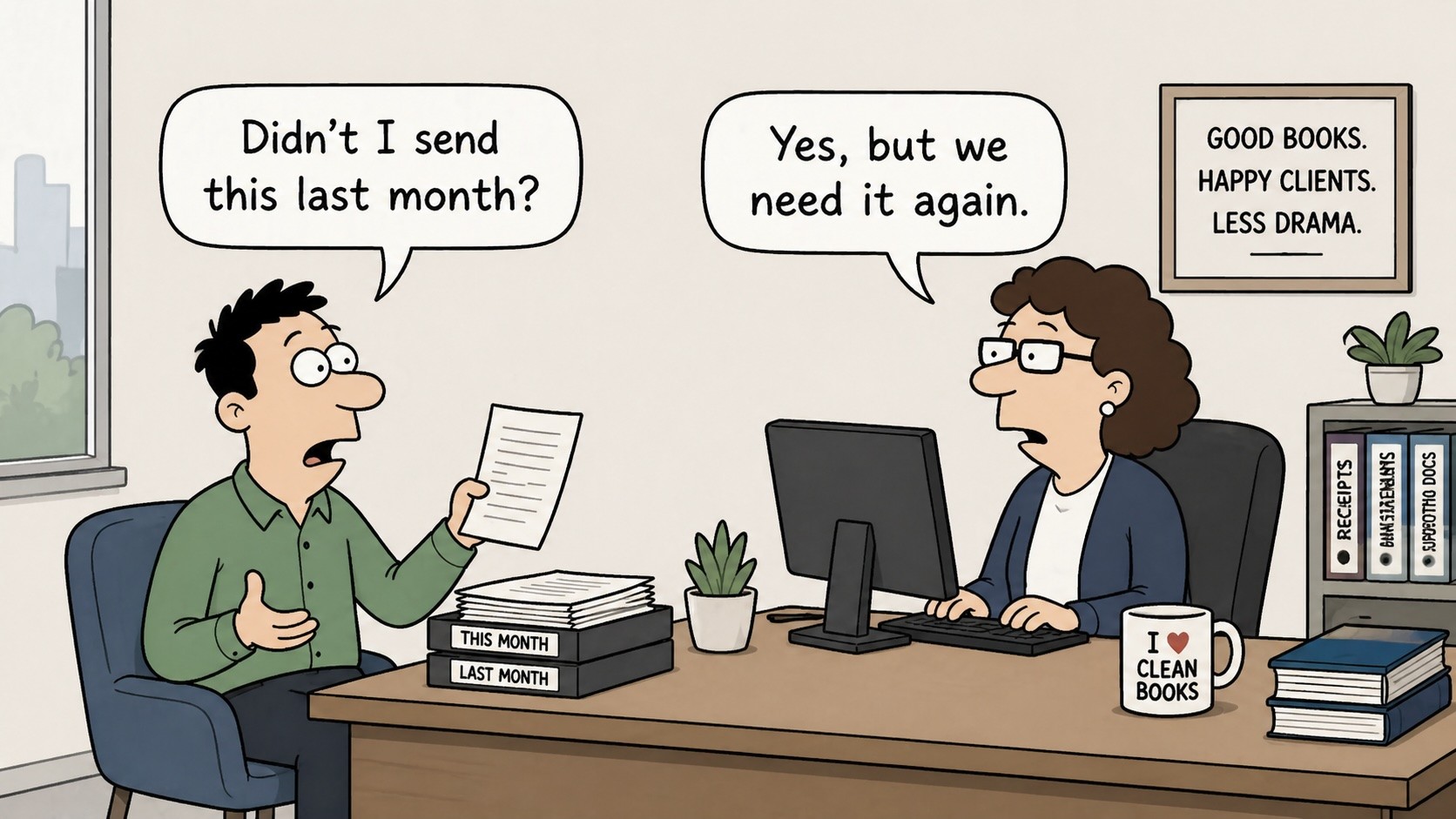
If you run a bookkeeping firm, collecting bank statements from clients is probably still a manual process. Month-end rolls around and instead of getting into the actual work, you find yourself sending reminder emails. Then a follow-up. Then another one. One client sends the wrong month. Another sends screenshots instead of proper statements. Someone forgets a credit card account entirely. By the time everything finally comes in, the close is already delayed.
This is especially common when firms rely on email-based workflows instead of structured systems. If you’re still collecting statements manually, it’s worth looking at how email compares to automated collection → (Email vs Automated Bank Statement Collection)
It seems like a small task at first, but once you multiply it across 20, 50, or 100 clients, it turns into a real operational bottleneck. The good news is that this is one of the easiest workflows to fix once you look at it the right way.
Why Bookkeepers Still Chase Clients for Bank Statements
For most firms, the process has not really changed. You request bank statements by email or through a portal, and clients are expected to remember to send them every month. When they forget, reminders follow. The entire workflow depends on manual follow-ups and client responsiveness. That is where things start to break down. Even if you stay organized internally, you are still relying on someone outside your firm to complete a task on time every single month.
The Problem With Manual Bank Statement Collection
Chasing clients for bank statements is not just frustrating, it creates real issues in how your firm operates. It delays your month-end close, introduces inconsistency across clients, and eats up hours of admin time that could be spent on more valuable work. It also affects the client experience. From their perspective, they are being asked for the same thing over and over again. None of this work moves the business forward. Reconciling accounts and advising clients is where your team should be spending time. Collecting documents is just a barrier to getting started.
Clients Aren’t the Problem
Most clients are not ignoring you. They are busy running their business. They are dealing with payroll, vendors, cash flow, and whatever else comes up during the month. Sending last month’s bank statements is rarely a priority, so it gets delayed.
This is one of the main reasons clients delay sending statements in the first place. It’s not resistance, it’s friction built into the process → (Why Clients Hate Sending Bank Statements)
That is completely understandable. The issue is not client behavior. The issue is a workflow that depends on them remembering to do something every single month. That is what creates the friction.
Step 1 — Standardize How You Request Bank Statements
The first improvement most firms make is standardizing the way they request documents. That usually means clearer templates, consistent deadlines, and better expectations. This can reduce confusion and make the process a bit smoother. It is a good step, but it does not solve the underlying problem. You are still manually collecting bank statements, just in a more organized way.
Step 2 — Reduce Back-and-Forth
The next step is trying to reduce the amount of follow-up required. Firms introduce reminders, centralize communication, or use tools to track who has sent what. This can help cut down on some of the back-and-forth, but the process is still dependent on client action. You are still spending time chasing bank statements, just slightly more efficiently.
Step 3 — Automate Bank Statement Collection
The real shift happens when you remove the process entirely. Instead of requesting bank statements every month, clients connect their accounts once through secure bank connections. From that point on, statements are generated automatically. There are no emails to send and no reminders to track. Everything is collected in the background. If you want to automate bank statement collection, this is the approach that actually eliminates the need for follow-ups instead of just reducing them.
What Automated Statement Collection Looks Like
In practice, automation changes the workflow completely. There are no more document requests at month-end and no waiting for clients to send files. Statements are already there, organized by client and by month. Your team can start the close immediately with a consistent and predictable process. Instead of reacting to missing information, you are working from a complete set of data every time.
When this process is removed, the entire month-end workflow becomes faster and more predictable → (How to Speed Up Month-End Close for Bookkeeping Clients)
Manual vs Automated Bank Statement Collection
With manual collection, you are dealing with email requests, multiple follow-ups, delays, and a workflow that becomes harder to manage as you grow. With automated collection, it is a one-time setup. After that, statements are generated automatically each month. The process becomes predictable and much easier to scale across your client base.
The Bottom Line
If your firm is still chasing clients for bank statements every month, the issue is not discipline. It is the process itself. Manual collection does not scale well, and it pulls your team away from more valuable work. Automation removes the need for follow-ups and gives your firm a cleaner, more reliable workflow.
If This Still Sounds Familiar
If your team is still spending part of every month following up for bank statements, you are not alone. A lot of firms still operate this way. It is one of the most common bottlenecks in bookkeeping workflows, and one of the easiest to remove once you switch to a system that runs automatically.
If you are ready to stop chasing clients for bank statements, you can automate the process here.