A practical explanation of how secure bank connections work and what bookkeeping firms should know before onboarding clients.
• 3 min read
• EasyBankStatements

One of the most common questions bookkeeping firms ask before adopting automated statement collection is simple:
Is it safe?
It’s a fair question. When clients are asked to connect their bank accounts, trust becomes a key part of the onboarding process. The good news is that modern bank connections are designed with security as the priority.
How secure bank connections work
Platforms like EasyBankStatements use secure third-party providers such as Plaid to connect client bank accounts. Clients authenticate directly with their bank through an encrypted connection. Credentials are not stored in plain text and the connection uses bank-grade security protocols. In most cases, the bookkeeping firm never sees the client’s login credentials. This is an important distinction.
What clients are actually authorizing
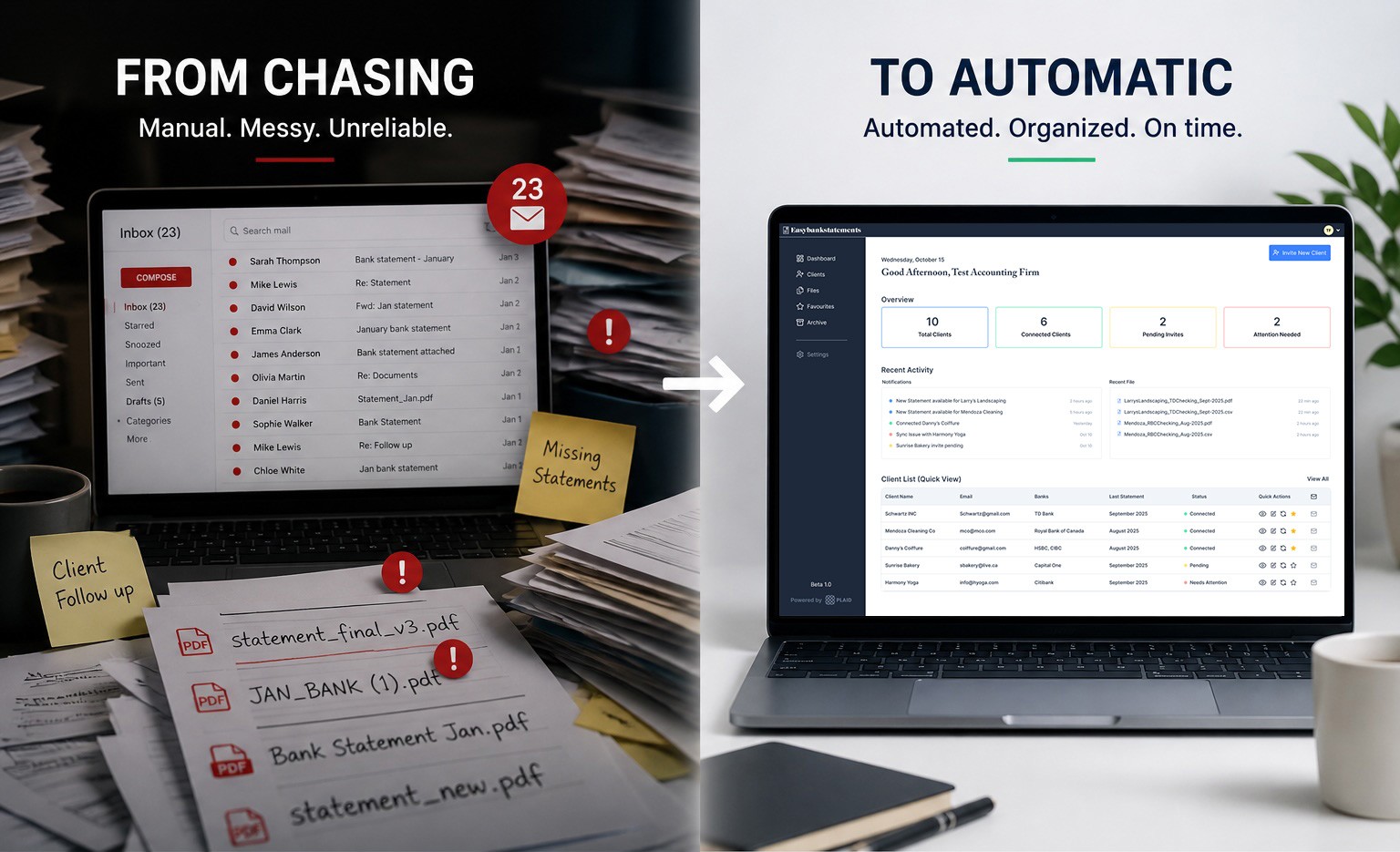
Clients are not giving unrestricted access. They are authorizing secure, read-only access for the purpose of retrieving account information and statements. This means no one can move funds or make changes to the account. The access is designed specifically for data retrieval. Why this is often safer than email. Many firms still collect statements through email attachments. Ironically, this can be less secure. Email threads, forwarded attachments, and local downloads create more points of exposure. Secure bank connections centralize the process and reduce manual document sharing.
Why trust matters
The easiest way to help clients feel comfortable is to clearly explain how the connection works. Once clients understand that access is encrypted and read-only, hesitation usually drops significantly.
Book a demo to see how secure bank connections work in EasyBankStatements.