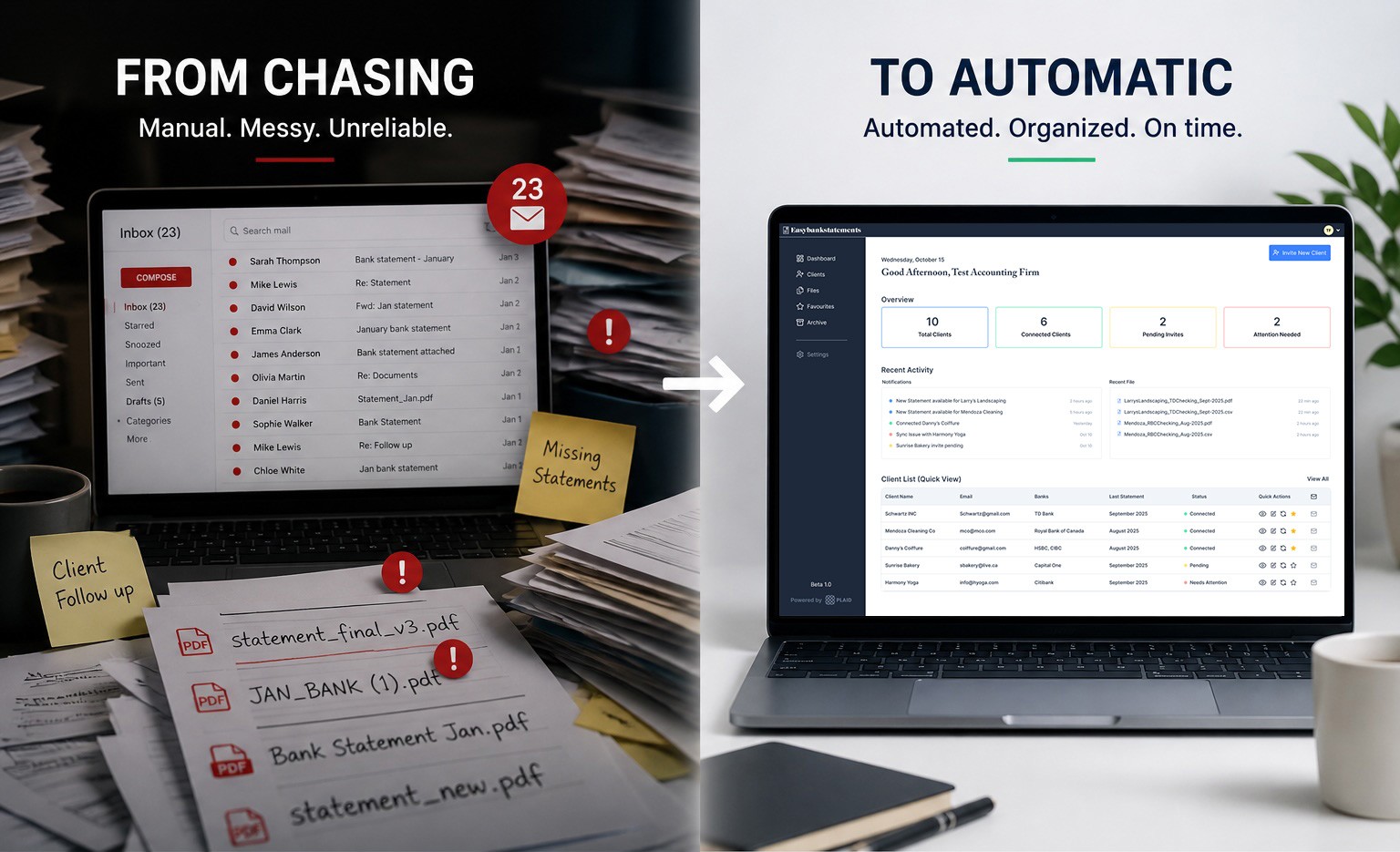
Compare email attachments with automated bank statement collection and learn which workflow reduces delays and admin work.
• 2 min read
• EasyBankStatements

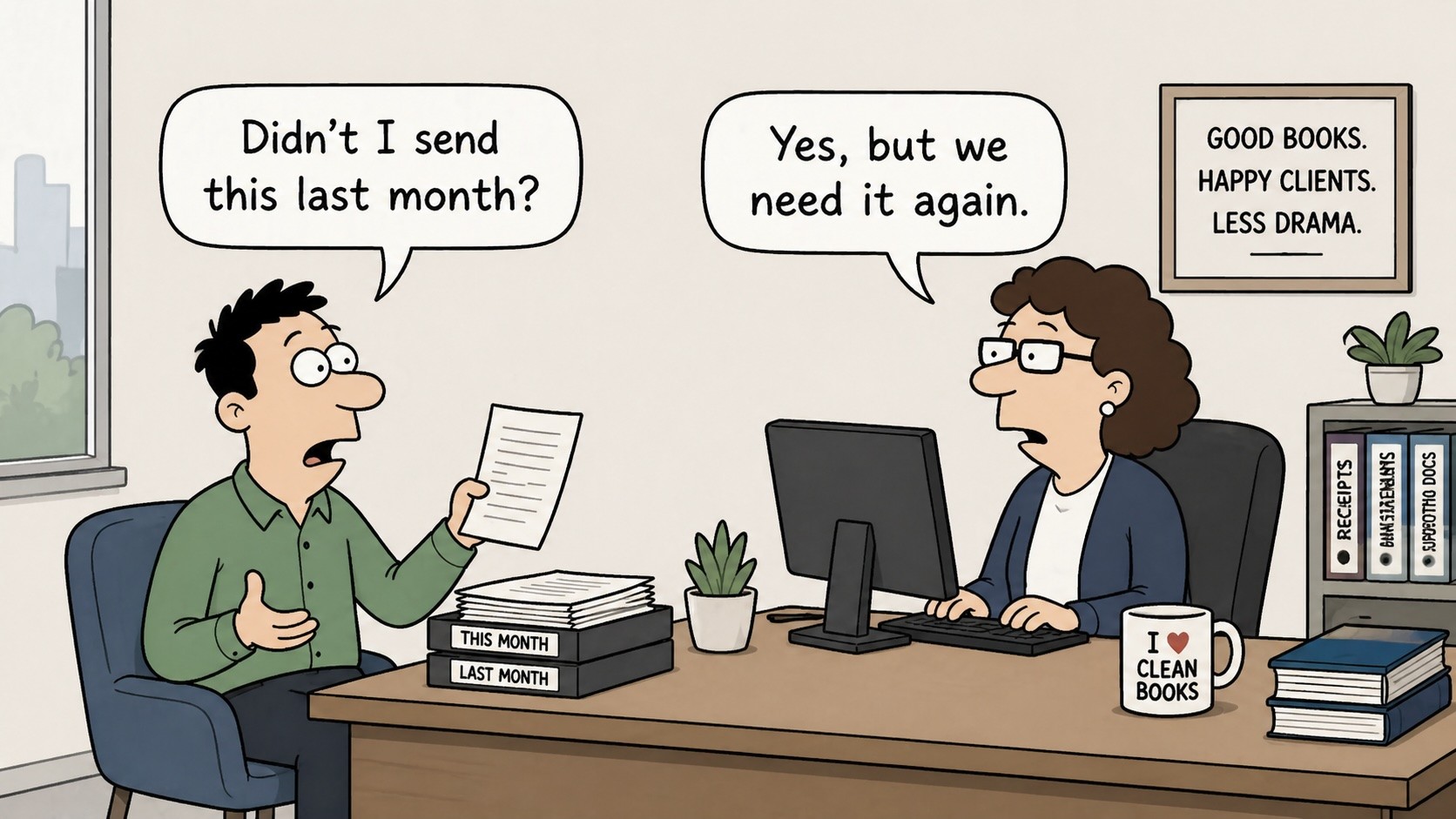
For many bookkeeping firms, collecting bank statements still happens through email. A client sends a PDF. Sometimes it’s the wrong month. Sometimes only one account gets sent. Sometimes the file never arrives at all. It works. until it doesn’t. As firms grow, this manual workflow becomes harder to manage.
The problem with email attachments
Email feels familiar, but it creates friction. Statements get buried in threads. Files are downloaded to different folders. Multiple versions can exist across inboxes and desktops. The process also depends entirely on the client remembering to send the correct file each month. That introduces delays before reconciliation even begins.
Why automation changes the workflow
Automated statement collection removes the monthly back-and-forth. Once a secure bank connection is established, statements are retrieved automatically and organized by client and month. That means your team starts work with the files already in place. No reminder emails. No chasing. No inbox clutter.
Which workflow scales better
For a handful of clients, email can be manageable. At 25, 50, or 100 recurring clients, automation becomes far more efficient. The biggest benefit is predictability. Your team knows the files will be there when month-end begins.
Book a demo to see how automated statement collection compares to manual email workflows.