Canada’s new open banking framework is changing how financial data is shared. Here’s what bookkeeping firms need to know.
• 5 min read
• EasyBankStatements
Canada’s new open banking framework marks a major shift in how financial data can be securely shared. For bookkeeping firms, this is highly relevant. It directly impacts how client bank information is accessed, how statements are retrieved, and how firms move away from outdated practices like shared credentials and manual login workflows.
What is open banking?
Open banking, also referred to as consumer-driven banking, allows consumers and businesses to securely authorize the sharing of their financial data with approved third-party providers through secure APIs. Instead of sharing usernames and passwords, clients provide explicit consent for read-only access to approved services. This is a major improvement over older workflows that rely on screen scraping or shared credentials.
Why this matters for bookkeeping firms
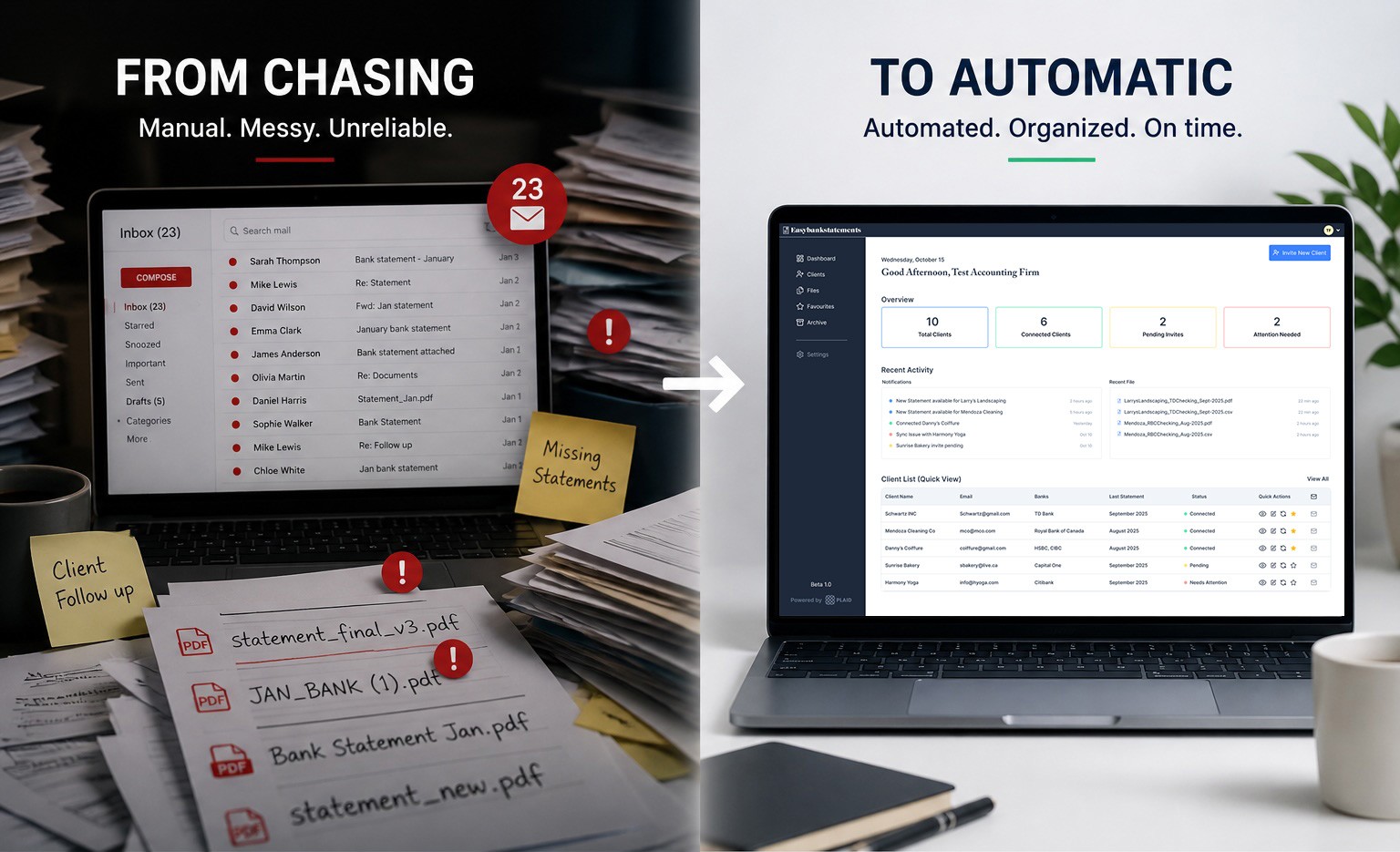
Many firms still rely on manual workflows to retrieve bank statements.
This may include:
asking clients to send PDFs
using shared login credentials
logging in on the client’s behalf
navigating different bank portals
These workflows create friction and risk.
Canada’s new framework is designed to reduce these issues by creating a secure, standardized way for financial data to be shared.
The end of shared credentials
One of the biggest implications is the move away from screen scraping. For years, many tools have relied on clients sharing banking credentials with third-party services. The new framework is specifically intended to reduce this practice and replace it with secure consent-based access.
This is good news for firms.
It improves:
client trust
security
auditability
workflow consistency
What this means for the future
The first phase is focused on read-only access, which is highly relevant to bookkeeping and statement retrieval workflows. For firms, this means the industry is moving toward a cleaner and more secure standard. Over time, clients will increasingly expect secure consent-based bank connections rather than manual document sharing. This is exactly where modern bookkeeping workflows are heading.
Book a demo to see how EasyBankStatements helps firms align with the future of secure bank statement collection in Canada.